Friday, April 24, 2015

Week 4 Desma 9 Blog Post: Medtech and Art


The Human Body and the medical practices performed on it were long ago considered an art form, as well as a science.  Ancient Egyptians mummified dead bodies, and would bury them with their most prized possessions in a careful, delicate, and artistic manner, with the more elaborate and exquisitely decorated mummifications being saved for the wealthy or prestigious deceased.  Ancient Greeks were obsessed with the body of man, and considered it to be the single most beautiful thing, and would dissect bodies to better understand the human machine.  In Leonardo Da Vinci's time, it was invaluable to an artist in sculpting or painting humans to understand the body on a deeper level.  Da Vinci performed private dissections and drew detailed drawings of human anatomy.  His work was a significant contribution to the social acceptance of the body in Europe.  

Ancient Egyptian Mummy 
Leonardo Da Vinci and proportioned body of man 

However, in our day and age, science and especially medicine isn't naturally considered an art form.  An art student would not likely consider herself to be  scientist or medical practitioner, and vice versa.  This is evident in seeing the evolution of oath-taking by graduating medical students.  To take an oath to perform ones job to the best of one's ability, and to execute one's craft with morality, has a ritualistic and artistic undertone.  The Hippocratic Oath, which emerged in the 6th century B.C.--formulated by the "father of medicine" Hippocrates--holds some of the basic tenants that many modern medical oaths taken today include.  The Hippocratic Oath held such promises as to treat all sick people to the best of that doctor's ability, to preserve patient privacy, to teach the secrets of medicine to the next generation without cost, and to promise to never perform an abortion or a patient-assisted suicide.  Many of these things have become outdated with the progression of our society, but taking a modern version of the oath is still practiced everywhere, but it is less enforced; there is really no penalty for transgressing the oath.  


It is interesting to see how in earlier times, the art of medicinal practice was upheld and cherished.  One quote out of the Hippocratic Oath states that "In purity and holiness I will guard my life and my art".  Today, pre-med and med students bustle from science class to science class, and stare into anatomy and calculus textbooks for hours on end.  Everything is factual and scientific at its core; the lines of morality and artistry to one's practice have blurred as medical technologies have advanced.

However, medicine and art still merge outside of the doctor's office.  One French woman, who has named herself "Orlan", performs live and recorded shows of herself being operated on.  Each time she gets plastic surgery done on her body and face, to show how the human body can be altered by medicine to embody something different.  She believes this to be her expression of art, how her body can be molded to have features of different artist's work.  She claims to have been performed on to now have the chin of Botticelli's Venus, the nose of Gerome Psyche, the lips of Boucher's Europa, the eyes of 'Diana' from a 16th c. painting, and the forehead of the infamous Mona Lisa.  

Orlan

If Orlan's aim is to provoke strong emotions in the viewer, she certainly succeeded with me!  In watching one of her performances, I cringed countless times and exclaimed out loud how disgusted I was.  It might well have been the creepiest video I've ever seen!  Although I don't believe routine plastic surgery to be a beautiful art form, it is a perfect example of how medicine and art interact, and I can appreciate how Orlan's performances cause such passionate emotions in the audience.  


Bibliography:


Tyson, Peter. "The Hippocratic Oath Today." PBS. PBS, 27 Mar. 2001. Web. 24 Apr. 2015. <http://www.pbs.org/wgbh/nova/body/hippocratic-oath-today.html>.


"Orlan - Carnal Art (2001) Documentary." YouTube. YouTube, n.d. Web. 24 Apr. 2015. <https://www.youtube.com/watch?v=no_66MGu0Oo>.


Sunday, April 19, 2015

Week 3 Post: Robotics and Art

WEEK 3

The technologies we rely so heavily on in our society would not be made possible without the Industrial Revolution that occurred in the 18th and 19th centuries.  It started with the invention of the printing press by Gutenberg, and progressed with contributions of people like Rene Descartes (father of Modern Philosophy), Michael Farady (work in the magnetic field), and Mary Shelley (author of Frankenstein, which still inspires scientists and artists today, especially in robot creation and infatuation).  However, I would like to take the time to focus on two highly valued persons of this era: Nikola Tesla and Henry Ford.


  • Nikola Tesla 
Serbian-American inventor 
Development of the alternating-current electrical system
Discovered the rotating magnetic field 
Worked for and alongside Thomas Edison, but eventually became his main competitor when he went to work with George Westinghouse
Helped to discover radar and X-ray technologies 


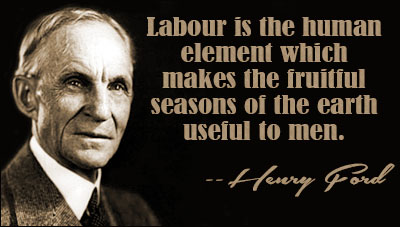
  • Henry Ford 

1908--Ford Model T Car--everyone could afford a car, and his workers earned steady reliable wages

Creator of the assembly-line mode of production, still used to this day

Wanted the need for cars to remain high (great demand) so he made sure to remodel his cars each year (similar to "Apple's" mentality to re-create the iPhone over and over so people will purchase the latest and greatest version).

Chief engineer for the Edison Illuminating Co.

1918--half of all cars in America were Ford Model T's!!!


Interesting Side Note on Ford:
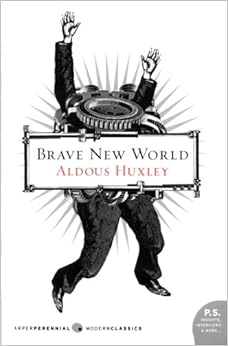
I recently read the novel Brave New World by Aldous Huxley, and in this book, set well into the future, humans were mass-produced in labs (the family unit and 'mothers' and 'fathers' were dissolved ideals), conditioned to like the work they were predestined to do in the "castes" they were born into, and instead of God, Henry Ford was the figure that the masses hailed to.  "T's" (Ford Model T) replaced 'crosses' as the "holy" symbol in society, displayed openly on buildings.  This "utopia" was driven by industrial revolutionary ideals, and many people still remark that this novel was Huxley's prediction of what our future world will look like.  The overarching message is that humans are looking more and more like the machines they operate, and speaking of humans becoming machines, the advent of humanoid and other robots in our society has become a hugely controversial topic of debate...


ROBOTICS + ART:

Now to the hot topic of the week!

While robots perform many useful functions (i.e. to search for and locate people who may be in grave danger,  to clean homes, or to amuse children in the form of robotic toys), they also can be taken from an artistic perspective.

One perfect example of this is from "The Puppeteer and the Inventor" video.  
The man and woman involved in the invention and creation of life-like puppets describe puppetry as a mobile art.  A mechanical humanoid tramp named Dirk seemed to most people to be real upon first glance; he was even arrested once!  A realistic-looking and acting monkey named Mono (which is monkey in Spanish :)) is the latest creation of these artists' "Electric Circus".  Children and adults alike love to watch this monkey perform animal and human actions, like screeching and running about, riding a bike, and playing the organ.


Walter Benjamin, in "The Work of Art in the Age of Mechanical Reproduction" stated that "the progressive reaction is characterized by the direct, intimate fusion of visual and emotional enjoyment with the orientation of the expert."  I believe that art forms like robotic life-like puppeteering immerse the audience into the art, as opposed to the "distracted mass[es]" mindlessly watching a film.


I personally, as an animal rights activist, believe that this use of art and invention to entertain people in incredible, especially since the cruelty involved with confining and conditioning a wild animal to perform tricks for human pleasure can be avoided when something such as the puppet "Mono" is used  to amaze and shock the spectators.  Artists should continue to work with robotic technologies, which in turn also helps breach the gap between art and science/engineering.  


Bibliography:

Bio.com. A&E Networks Television, n.d. Web. 19 Apr. 2015. <http://www.biography.com/people/nikola-tesla-9504443>.

Bio.com. A&E Networks Television, n.d. Web. 19 Apr. 2015. <http://www.biography.com/people/henry-ford-9298747>.

"Videos." Video Electic Circus. N.p., n.d. Web. 19 Apr. 2015. <http://www.electric-circus.eu/htmlenglish/videos.html>.

Benjamin, Walter, and J. A. Underwood. The Work of Art in the Age of Mechanical Reproduction. London: Penguin, 2008. Print.


Saturday, April 11, 2015

DESMA 9 Week 2 Blog

WEEK 2: Math+Art


This week we learned about the intersection of mathematics and art, another fostering of the "Third Culture" in our society.  During the Renaissance period of the 1400s and 1500s, artists were praised and in-famed for their commissioned work, with which principles of math were unabashedly intertwined. The aspiration was that, with perfect mathematical dimensions, the works of art would give the most realistic and proportionally exact effect for all admirers.  

In this unfinished "Adoration of the Magi" by Da Vinci, one notices the grid lines used to cause realist effects
The perfect example of an artist incorporating mathematics and creativity is Leonardo Da Vinci.  He ingeniously fused geometrics and linear perspective in his work.  He was a "student of all things scientific" who did not see any separation between mathematics and artistry.  His resume included painter, architect, inventor, intellectual, and teacher--he was and remains the ultimate "Renaissance Man" embodying the doctrines of humanism.  


However, in our modern culture, math and the arts have gone through a stark division.  People identify with one side or the other--perhaps they are even scared of the opposite spectrum.  I personally am intimidated by numbers and calculations, but have challenged myself with 4 math-based courses in my first year here at UCLA. In this way, I seek to close the gap between my abilities in humanities subjects, and my aptitudes for scientific specialties.  

Although people in general do see themselves as either creative, free-thinking, and artistic OR factual, mathematical, and scientific, there are artist's currently seeking scientific explanations to influence their work.  For example, in The Fourth Dimension and Non-Euclidean Geometry in Modern Art: Conclusion, the concept of a fourth dimension has been shown to be vital to 20th century art.  The spiritual concept of the fourth dimension of reality, something otherworldly and 'felt' if one could breach three dimensional boundaries has helped artists to gain out-of-body experiences.  However, the scientific concept of the 4th dimension as time, influenced by Albert Einstein's Relativity Theory, has also helped artists go beyond conventional limits and "depart from visual reality and to reject...the one-point perspective system that for centuries...portrayed the world as three-dimensional."


This YouTube video was extremely interesting to me as it gives a mathematical and spatial explanation for the fourth dimension that I was unaware of.  The trick:  towards the end of the video, when the impressive 4-D shapes are being shown and rotated, let your eyes focus on it and then blur over--you will begin to see geometric shapes moving within other geometric shapes as if in a grand mathematical orchestration.  It is highly mathematical as well as beautifully artistic.  This video drives home Professor Vesna's point about how computers are connecting math and art in unimaginable ways (and really, computers are connecting everything and everyone!).  


In even more obvious ways, art and math coincide in our world.  "From the Great Pyramids in Egypt to the New York City skyline, mathematical concepts such as the Golden Ratio, measurement conversions, and basic geometric shapes" are used to create the art and architecture that we admire and function within every day. Math and art will continue to go hand-in-hand, especially with the rise of technology. The separation of math and art will hopefully be dissolved, with artist's taking pride in their scientific incorporations, and scientists taking note of aesthetics and artistic beauty in natural observations and experiments.  


Works Cited:


"Leonardo Da Vinci." History.com. A&E Television Networks, n.d. Web. 12 Apr. 2015.

"4th Dimension Explained." YouTube. YouTube, n.d. Web. 12 Apr. 2015.

"Mathematics and Art: An Unlikely Connection." Calculus I Blog. N.p., 19 Feb. 2009. Web. 12 Apr. 2015.

Dalrymple-Henderson, Linda. "The Fourth Dimension and Non-Euclidean Geometry in Modern Art." JSTOR. MIT Press, n.d. Web. <http%3A%2F%2Fwww.jstor.org%2Fdiscover%2F10.2307%2F1575193%3Fuid%3D2%26uid%3D4%26sid%3D21106427753743>. 


Wednesday, April 8, 2015

Desma 9 Week 1 Blog

WEEK 1

 This week, we have covered the topic of "two cultures",  two worlds of thinking and of learning, that of the arts and that of the sciences.  It I the conception that scientists believe artists and writers to be "lacking in foresight" and "restricting of art to the existential", while artists think of scientists as "unaware of man's condition" and "shallowly optimistic".  I definitely do see the gap between the two cultures in my own life.  For example, since the 7th grade specifically, I have loved both science and writing.  I now desire nothing more than to be a veterinarian, as well as an author on the side.  These two things are both extremely difficult and opposite of one another, but nonetheless they are what I want--a mix of both cultures.  But the pressure to pick a major in college of either one or the other is huge.  Should I be a North Campus student or a South campus one?  I started out as a science major, but realized that this path was near-impossible with my demanding water polo schedule.  I also felt very limited and confined with a load of science classes that were all similar and rigid.  Now I am on track to be a Human Biology and Society Bachelor of Arts pre-major.  This degree offers a mix of North and South campus, humanities and science, which is exactly what I have been looking for. 


It is interesting to me that C.P Snow, the man who coined the phrase "Two Cultures" in the 1950s, wanted the title of his lecture to be "The Rich and the Poor".  This in itself is evidence that there are many types of culture gaps between groups in our society.  There are intellectuals and scientists, there are the wealthy and the struggling, and in my life, as an athlete, I feel that there is a large gap between athletes and non-athletes on the UCLA campus.  The athlete scoffs at the non-athlete for being a nerd with an enormous amount of free time, but still complaining about how stressed and time-constrained they are, while the non-athlete student thinks that the "jocks" are dumb and unworthy of the university because they got in to school by flexing their muscles. 


 One of the videos from this week really stuck with me.  It was the RSA education reform video.  It talked about shifting the paradigm of our current school model.  Paradigms were a concept originated by Thomas Kuhn, a scientist and intellectual who saw a pattern in science of a pre-scientific stage turning into a fixed paradigm, which would be shaken by apparent anomalies, and then a 'revolution' would occur following a crisis, leading ultimately to a new and accepted paradigm.  Educational paradigms, although shaken by many anomalies, or incidences showing cracks in the system, do not change with ease.  Our current system was designed during and for the Enlightenment age.  There remains an industrial, production-line mentality for schooling, which is boring kids to the brink of mental challenges, like ADHD.  Standardization of students is something that mustn't go on else we lose all capability for divergent thinking and creativity.  Separating kids as if in a factory, and compartmentalizing them into science or math or English, in other words furthering the two-culture gap, does not foster the innovative world we are trying to create through collaboration of great minds. 


TED talk on educational system and need for reform


References:

Snow, C. P. The Two Cultures and the Scientific Revolution. New York: Cambridge UP, 1959. Print.

Vesna, Victoria. "Toward a Third Culture: Being In Between." Leonardo 34.2 (2001): 121-25. Web.

"RSA Animate - Changing Education Paradigms." YouTube. YouTube, n.d. Web. 05 Apr. 2015.

 "Sir Ken Robinson: Bring on the Learning Revolution!" YouTube. YouTube, n.d. Web. 05 Apr. 2015.